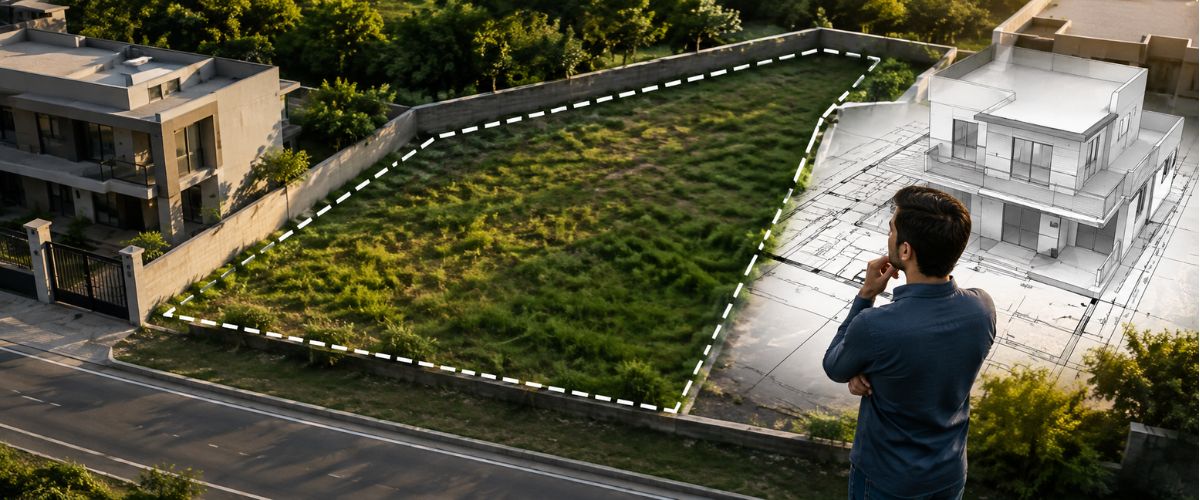
It can play a big role in determining the value, usability and future appreciation of your property when you are buying land on which you want to put up home or investment property. One of the most frequently compared properties among buyers is Corner Vs Regular Plot.
Different types of plots offer advantages and disadvantages based on considerations like privacy, price, airflow, accessibility, investment potential etc. In a lot of real estate developments, corner properties are regarded as premium, but regular plots still enjoy demand for their relatively lower prices and within the premises peace.
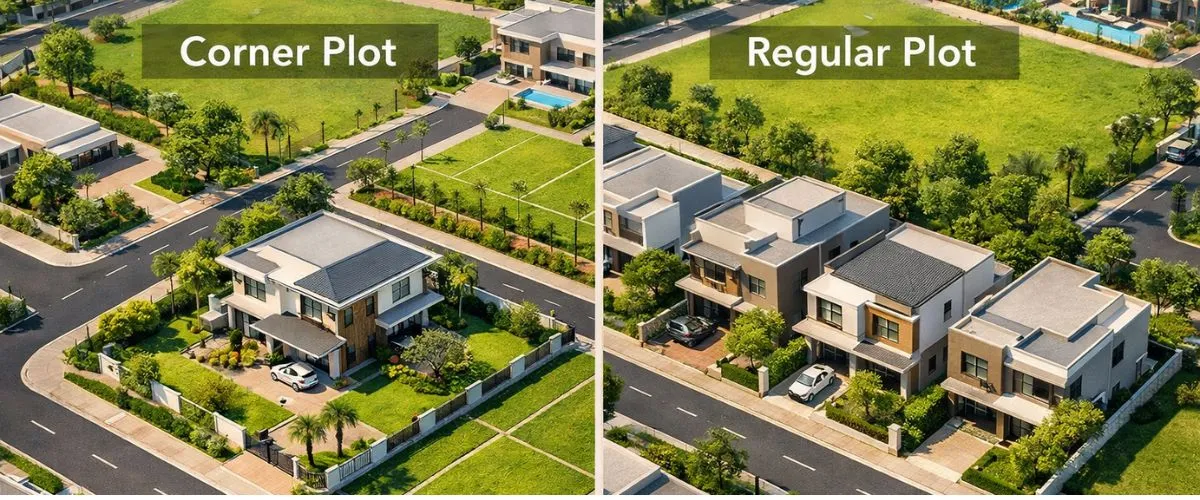
A corner plot is one which forms the intersection of two roads in a residential layout or township. The more access and openness than other plots in the development, as the plot has roads on two sides.
Corner plots are at a strategic location, and hence they command higher prices and are deemed legacy properties in various plotted developments. Buyers seeking more visibility, ventilation and flexibility tend to prefer them.
A regular plot (mid-row) is found between other plots in one row. It only has one side that is directly accessible from the street; the other sides are bordered by other properties.
Regular plots are the most prevailing kind of plots in housing societies, frequently chosen by individuals seeking reasonable selections with more privacy.
Better Ventilation and Natural Light
The best part corner plots are good ventilation and natural lighting. Homes constructed on such open plots boast good airflow and sunlight because two sides of the plot are open.
This not only provides a healthier atmosphere, but it lessens the need for artificial light during daytime hours.
Greater Design Flexibility
Corner plots give you a few more options when it comes to designing a home. With two sides facing the street, architects can include:
This versatility enables homeowners to design larger and more attractive buildings.
Higher Property Value
Typically, corner plots are valued higher in the market than regular plots. Many real estate developments include these plots, as developers charge a premium on compared to lower elevation plots due to the better location.
That makes them a great choice for long-term investment and better resale value.
Extra Parking and Accessibility
Because corner plot properties look onto two roads, homeowners often receive extra space on the side of their house along the road which can be used for parking.
This is particularly important in urban environments where parking can be at a premium.
Potential for Commercial Use
Due to their visibility and accessibility, corner plots are perfect for small commercial establishments, offices or mixed-use developments as well.
It enhances their investment prospects in emerging markets.
Higher Purchase Cost
Corner plots are usually priced between 10–30% higher than regular plots of the same layout. Compared to traditional models, this difference in price can make them less accessible for buyers on a budget.
Increased Traffic and Noise
Being situated at intersections, corner plots are also subjected to more traffic movement, noise and dust.
This can impact the overall tranquillity of a residence.
Less Privacy
Corner plots are more visible to passersby since roads run along two sides. This will decrease privacy more than mid-row plots.
Often homeowners have to put in higher boundary walls or landscaping experts to keep things private.
Higher Maintenance Costs
Corner properties tend to have more open green area and bigger boundary areas, leading to higher maintenance and upkeep costs.
More lighting and security measures could also be needed.
More Affordable
Regular plots are cheaper than corner plots, and this price difference has buyers with a limited budget attracted towards the regular ones.
As a practical and cost-effective investment for first-time property investors, mid-row plots cater to their needs.
Better Privacy
Border lots are flanked on both sides by nearby houses, preventing a more private living atmosphere.
This minimizes exposure to passing cars and pedestrians.
Quieter Surroundings
Typically, as they are not situated at road junctions regular plots tend to have less traffic noise and disruption.
For families seeking peaceful living areas, this makes them ideal.
Lower Maintenance Costs
Unlike corner plots, where three sides are exposed to the street and therefore need some maintenance on all those sides regularly, regular plots have only one road-facing side.
It has less area to maintain, which can lower maintenance costs over time.
Limited Ventilation
Most plots in regular neighbourhoods have other properties on three sides as neighbours, which may restrict the flow of air and natural light.
This can be dealt with in reacute;proper architectural planning.
Restricted Design Options
Regular plots offer less flexibility for house design since only one side faces the road.
Lower Visibility
Corner plots are much more visible than regular plots. This enhances privacy but potentially hampers commercial use or rental visibility.
Ultimately, the decision between a corner plot and a regular plot comes down to your budget, lifestyle preferences, and investment goals.
If you want a corner plot, select one:
If you'd like, pick a normal plot:
Whether investing in land or apartment makes a better choice depends on the location, infrastructure project and future growth plan of that area.
Purchasing a plot is an important investment decision and knowing that corner plots are not the same as regular plots can help you make the right choice. But corner plots usually cost more, although they also have added advantages such as better accessibility, ventilation and resale value. Regular plots, in contrast, offer affordability, privacy, and a tranquil atmosphere.
When deciding whether to buy, purchasers should weigh their budget, plans for construction in the future and long-term investment intent. A thoughtful appraisal of these elements will yield a plot that satisfies both your lifestyle and budget requirements.