Owning a farm house is a dream for many — a peaceful retreat away from the city, surrounded by open land, fresh air, and greenery. But to truly enjoy the peace, health, and prosperity a farm house promises, it needs to be built and planned right. This is where vastu tips for farm house come in. Rooted in ancient Indian architectural science, Vastu Shastra helps align your farm house with natural energies — improving everything from family harmony to agricultural yield.
Farmhouse Vastu is the application of Vastu Shastra principles to the planning, direction, and construction of a farmhouse — including both the residential structure and the surrounding agricultural land. Unlike a city home, a farmhouse Vastu plan has to account for a much larger plot, open farmland, animal sheds, water sources, and outdoor structures, making it slightly more layered than standard vastu for farmhouse guidelines used for city properties.
When followed correctly, farmhouse Vastu is believed to bring several benefits:
Before construction even begins, the plot itself plays a major role in vastu shastra for farm house planning.
Ideal Plot Shape
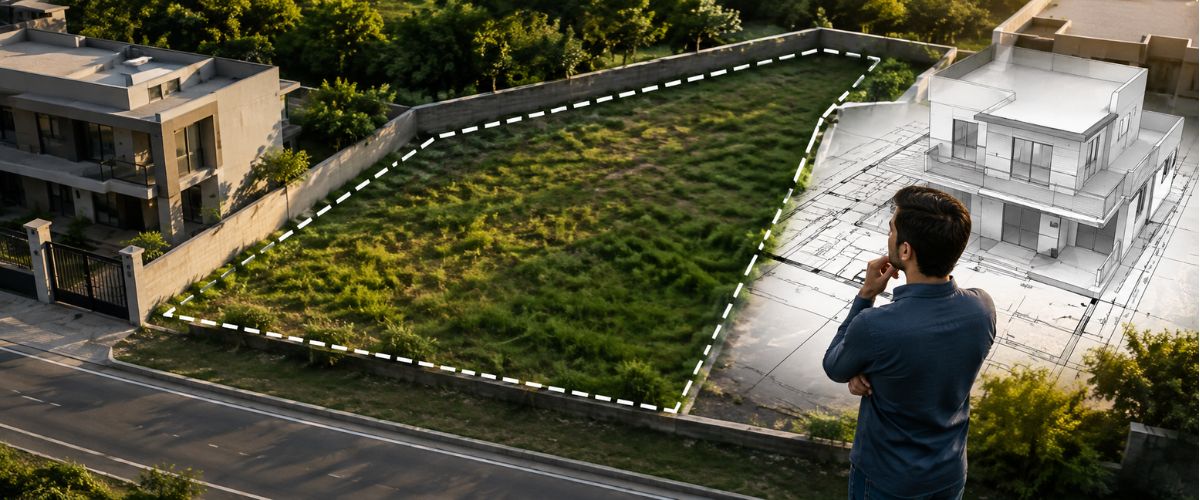
Square or rectangular plots are considered the most auspicious as they allow even energy distribution. Triangular, L-shaped, or irregularly cut plots are best avoided, as they are believed to cause instability and uneven energy flow. If you already own an irregular plot, planting trees or building small structures in the missing corners can help balance it.
Slope Direction
The natural slope of the land should ideally be towards the North, East, or Northeast. A slope towards the South or Southwest is not recommended, as it can work against the natural flow of positive energy and sunlight.
Road Direction
While selecting a plot, avoid land where the only approach road is from the south. Roads on the north or east sides are considered more favourable.
Extensions & Cuts
An extension of the plot towards the Northeast is considered auspicious and is believed to bring prosperity. Extensions or cuts in the Southwest or Southeast, on the other hand, are best avoided.
Direction is at the heart of any farm house vastu plan. Here is how to plan the layout of the main structure.
Best Direction for the Main Building
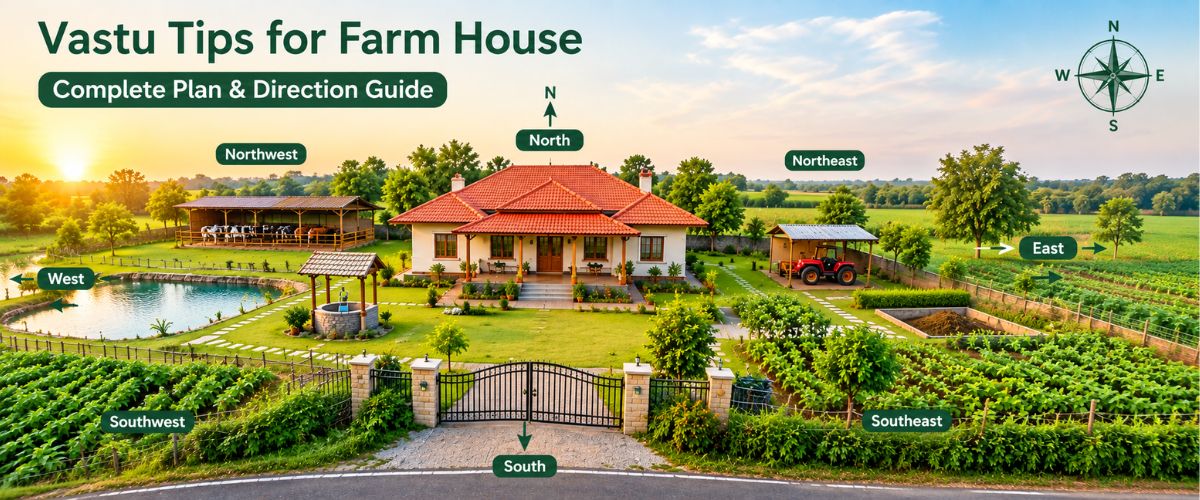
Most traditional Vastu practitioners recommend placing the main farmhouse building in the South, West, or Southwest portion of the plot. This is because a large open plot naturally has abundant Northeast exposure for sunlight and energy — building on the South/Southwest allows the Northeast to remain open, which is considered the most sacred zone. Keeping this zone clear (rather than building over it) is what actually brings the auspicious effects, not building directly in it.
Main Entrance/Gate Direction
The main gate and entrance of the farmhouse should ideally face North, East, or Northeast — these directions are believed to welcome positive energy and sunlight into the home.
Water Flow Direction
Any water channels, drains, or natural flow paths on the property should be designed so that water moves from South to North, aligning with the natural energy flow recommended in Vastu.
Once the overall plan is set, individual rooms should also follow Vastu guidelines.
Kitchen Vastu
The kitchen should be placed in the Southeast direction, which is governed by the fire element (Agni). If Southeast isn't feasible, the Northwest is a good alternative. Avoid placing the kitchen in the Northeast.
Bedroom Vastu
The master bedroom works best in the Southwest, offering stability and restful sleep for the head of the household. Other bedrooms can be placed in the Northwest or Southeast.
Pooja Room / Prayer Area Vastu
The Northeast corner is considered the most auspicious for a pooja room or meditation space, as this direction is associated with spiritual energy and clarity. Keep this area clutter-free and well-lit.
Living Room / Guest Area
The living room or common gathering area should ideally be in the North or East, inviting positive energy and making the space welcoming for family and guests.
Toilet/Bathroom Placement
Bathrooms and toilets should be located in the Northwest or West. Strictly avoid placing them in the Northeast, as this is believed to disturb the positive energy of the home.
Staff/Labour Quarters
If your farmhouse includes staff or labour quarters, the West or Southeast corner is recommended for these structures.
A farmhouse is not just a residential structure — it's part of a larger agricultural setup. Here are Vastu guidelines for the farm elements around it.
Water Body — Well, Borewell, Pond
Wells, borewells, and ponds should be located in the Northeast, which is associated with the water element and prosperity. Avoid placing water bodies in the Southwest (believed to cause illness) or Southeast (believed to cause financial loss and theft).
Cattle Shed / Animal Placement
Cattle, goats, and other farm animals should be housed in the West or Northwest direction of the property. Ideally, arrange the shed so animals face North or East when tied — never South.
Placement of Agricultural Equipment & Tools
Store tractors, ploughs, and other equipment in the South or Southwest. Avoid keeping equipment in the North, East, or Northeast, as this is believed to negatively affect productivity.
Compost/Manure Pit
The pit for compost or manure preparation should ideally be dug in the West or Southwest corner of the land.
Trees & Plants
Tall, heavy trees should be planted on the South or West side of the property, where they help block harsh sunlight and add stability without obstructing the Northeast energy zone. Grow Tulsi and Amla in the Northeast corner for positive energy. Avoid planting tall trees in the North or East, as they can block beneficial morning sunlight.
The compound wall around a farmhouse should be higher and thicker on the South and West sides, and lower on the North and East sides. This is believed to help contain positive energy within the property while allowing it to freely enter from the North and East.
Many modern farmhouses include a swimming pool as a leisure feature, and its placement matters just as much as any other structure on the property.
Vastu for Swimming Pool on Terrace
Rooftop or terrace swimming pools have become popular in modern farmhouse designs, but they need extra care. As per Vastu, a terrace pool should ideally be positioned towards the North or Northeast of the terrace, keeping the structural load light and well-distributed. Since a terrace pool adds weight to the upper level, it's important to consult a structural engineer alongside a Vastu expert, as heaviness in the wrong zone (like Southeast or Southwest) can amplify negative effects. Keep the surrounding deck open and uncluttered, and avoid placing the pool directly above bedrooms or the pooja room.
| Do's | Don'ts |
| Choose a square or rectangular plot | Avoid triangular or irregular plots |
| Build the main structure in South/Southwest | Avoid building directly in the Northeast |
| Place the main entrance in North/East/Northeast | Don't face the main gate South |
| Keep water bodies in the Northeast | Avoid water bodies in Southwest/Southeast |
| Place cattle sheds in West/Northwest | Don't let animals face South |
| Keep the Southwest and West walls higher/thicker | Don't keep boundary walls uneven or weak |
| Grow tall trees in South/West | Avoid tall trees blocking North/East |
Even with the best planning, some Vastu doshas (defects) are unavoidable, especially in already-built properties. Here are common issues and simple remedies:
Irregular plot shape: Plant trees, install a Vastu pyramid, or build a small structure in the missing corner to balance the energy.
Water body in the wrong direction: If relocating isn't possible, use remedies like installing a Vastu pyramid nearby or adding indoor plants and mirrors to redirect energy.
Farmhouse built in the Northeast: This can obstruct the flow of positive energy. Keeping the area extremely clean, well-lit, and clutter-free, along with placing a crystal or pyramid, can help offset the impact.
Kitchen in the wrong zone: If the kitchen cannot be relocated, painting the walls in warm colours (orange, red) and ensuring the cook faces East while cooking can help balance the fire element.
Toilet in the Northeast: Keep the toilet door closed at all times, use light colours, and place a bowl of sea salt inside to absorb negative energy.
Is Vastu applicable for a farmhouse?
Yes, Vastu Shastra principles apply to farmhouses just as they do to residential homes. Since a farmhouse includes both a living structure and agricultural land, Vastu covers plot selection, building direction, room placement, and even the placement of farm elements like cattle sheds, water bodies, and equipment.
Is having a banyan tree in a farmhouse considered inauspicious as per Vaastu?
A banyan (Peepal) tree is considered spiritually significant, but Vastu recommends against planting it too close to the main farmhouse building, especially in the North or East, as its dense, far-reaching roots and heavy canopy can block sunlight and positive energy flow. It's generally considered more auspicious when grown at a distance from the house, ideally towards the South or Southwest boundary of the property, rather than right beside the residence.
What is the best direction for a farmhouse as per Vastu?
The main building is best placed in the South, West, or Southwest portion of the plot, keeping the Northeast zone open for positive energy to flow through the property.
Which direction is good for a farmhouse main gate?
North, East, or Northeast is considered the most auspicious direction for the main entrance gate of a farmhouse.
Where should the well or pond be located in a farm as per Vastu? Water bodies like wells, borewells, or ponds should ideally be placed in the Northeast direction of the farm.
Can a farmhouse be built in the Northeast direction of the plot?
It is generally not recommended, as the Northeast is considered the most sacred and energy-sensitive zone. Building here is believed to block the free flow of positive energy across the property.
How can I correct Vastu dosh in an already-built farmhouse?
Common remedies include using Vastu pyramids, mirrors, specific colour schemes, keeping problem zones clean and clutter-free, and adding indoor plants to help rebalance the energy without structural changes.
Is Vastu for a farmhouse different from Vastu for a regular house?
Yes, while the core principles (directions, elements, energy flow) remain the same, farmhouse Vastu additionally covers agricultural elements like cattle sheds, farming equipment, compost pits, and larger open land — aspects that don't apply to a typical city home.