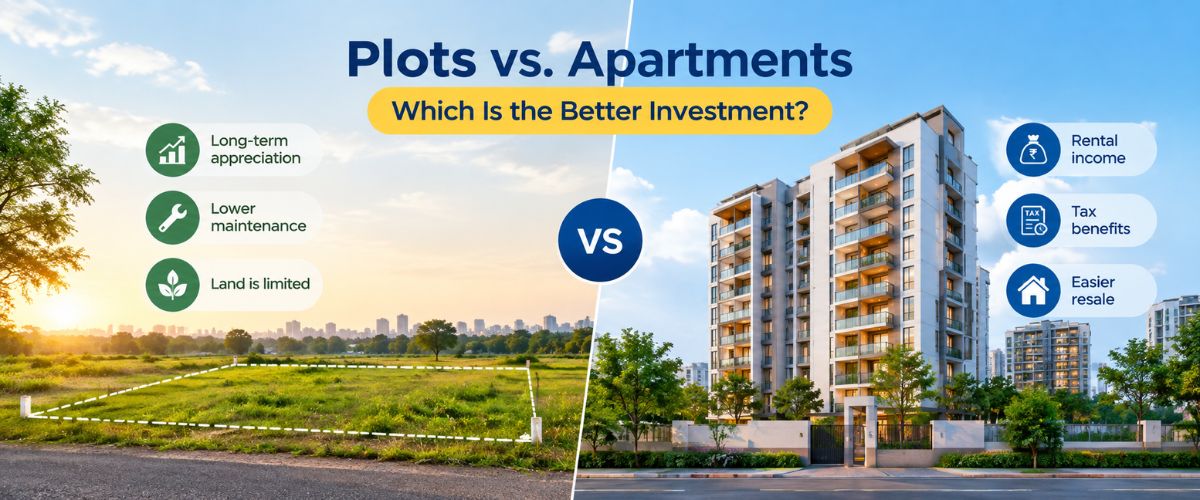

Purchasing an allotment of land is typically the initial move in constructing your envisioned dwelling or investing for the long haul. But unlike buying ready-to-move-into properties, a bank loan for plot and construction comes with its own set of conditions, eligibility criteria and risks. Many buyers think of plot loans as a home loan’s distant cousin — but lenders take a much closer look.
Knowing how plot loan approvals work can help you avoid rejections, delays and financial surprises later. So here is everything that you need to know before approaching a bank for getting a loan for plot.
A plot loan is a type of loan that you can avail yourself to purchase land for residential use. But banks usually have different rules for plot loans than they do for home loans, since land is seen as a riskier asset.
In most cases, financial institutions would like to give you a composite loan wherein you buy the plot—in addition to promising to construct a house in a stipulated time (normally 2–3 years). This helps the land to be put into productive use and lowers the risk for the lender.
Gaura Farm in Vrindavan offers properly documented farmland that can assist buyers in exploring bank loan approval options, subject to eligibility and lender policies.
Banks check your financial and personal profile before approving a plot loan. The basic eligibility criteria include:
• Age: Generally between 21 and 65 years
• Stability in income (salary, self-employment)
• Good Credit Score (generally 650 or higher).
• Employment stability and repayment capacity
Lenders analyze your income and current liabilities to find out what loan amount you will be able to afford. The higher your credit score, the better your chances of getting approved and potentially locking in lower interest rates.
LTV Ratio: One of the most crucial parameters to determine whether safe plot loan approval would be available or not. This is how much of the plot’s value the bank will fund.
• Most banks fund 60%–75% of the plot value
• Buyers are required to come up with a 25%–40% deposit
When you are applying for a home loan, the banks will tell you how much they can give you depending on your LTV ratio Consider this where the plot costs ₹25 lakh and bank is offering 75% as LTV, then in that case you'll get a loan of ₹18.75 lakh from the bank and only need to arrange remaining ₹6.25 lakh by yourself.
A higher down payment requirement is among the most significant distinctions from home loans.
As plot loans carry slightly more risk than home loans do, the interest rates on them are generally higher.
• Interest rate — usually from 9.5%–10% depending on credit profile
• Loan tenure can be from 3 to 30 years
Borrowers can choose between:
• Interest rate fixed: EMI constant, no variability
• Floating interest rates: EMIs vary as per market conditions
Longer tenure means that monthly EMI is lower, but total interest paid out over the loan period is higher, and conversely a shorter tenure saves you interest at the cost of a higher EMI burden.
Location is a big factor in actually getting the loan approved. Banks prefer plots in:
• Approved layouts
• Urban or developing areas
• Locations with proper infrastructure
Plots in the rural or disputed locations might either have a higher rate of interest, or will get rejected altogether. This is why plotted developments of good developers, tend to have better loan eligibility.
Clear legal ownership of the land is one of the most important point involved in its approval for a loan.
Banks ask for:
• Clear title and ownership history
• Approved layout plans
• No legal disputes
• Proper land-use classification (residential)
Poor documentation or disputing can immediately result in the loan being denied.
In addition, you will also have to submit personal documents like:
• Your Identity proof (PAN, Aadhaar, Passport)
• Address proof
• Income proof (salary slips, ITR, Form 16)
In addition to interest rates, borrowers need to factor in other costs like:
• Processing fee (approximately 1% of loan amount)
• Legal and valuation charges
• Documentation fees
Such charges are not part of the loan amount and should be paid separately.
Knowing these costs beforehand is better than being financially drained in the future.
Loan plots come with flexible repayment schemes, but the borrower should be clear about the terms:
• EMI is based on loan amount, tenure & interest rate
• Many lenders provide a moratorium period (temporary EMI relief)
• Options for prepayment may relieve the burden of interest
Lenders in many cases permit full or partial prepayment without steep penalties, allowing borrowers to close loans sooner and pay less interest.
For plot loans, tax benefits are not immediate as is the case with home loans. But as soon as construction begins, tax benefits kick in:
• Section 80C deduction for principal repayment
• Interest deduction after the completion of construction
Note: Interest subsidies can be availed through schemes like PMAY (PradhanMantriAwasYojana), provided the eligibility criteria are met.
It’s crucial to verify before closing on your loan:
• Prepayment charges (if any)
• Foreclosure rules
• Conditions for early loan closure
Most lenders allow prepayment at no penalty, which helps minimize total interest paid over time.
The below-mentioned challenges are common:
When applying for plot loans, buyers typically face multiple challenges:
• Property value is higher than loan eligibility
• Strict documentation requirements
• Limited financing for unapproved layouts
• Mandatory construction clauses
In some situations, banks might necessitate evidence that you intend to build a house within a specific timeframe, otherwise fees or increased interest rates might be imposed.
To better your chances of getting a plot loan approved:
• Keep a good target credit score (750+)
• Select plots in approved and developed sectors
• All legal documents are authentic.
• Don’t accept the first offer, check out multiple banks and NBFCs.
• Choose well-planned projects with renowned developers
Proper due diligence not only increases the likelihood of approval but also safeguards one's investment.
Conclusion
To obtain a plot bank loan is not a challenging task if you are only prepared beforehand. Dissecting both the eligibility criteria and the interest rates, along with legal documentation requirements or location factors, everything contributed to the approval.
Plot loans, unlike home loans, are usually granted under greater scrutiny and for a lower financing limit, making it essential for buyers to be well informed before applying. These basics will help you make decisions, avoid common mistakes, and put you one step closer to owning the land of your dreams!
For investors and homebuyers alike, with the right knowledge and property selection it is possible to transform a straightforward land purchase into a lucrative long-term investment.