What Is Khata and Why It Matters Before Buying a Plot?
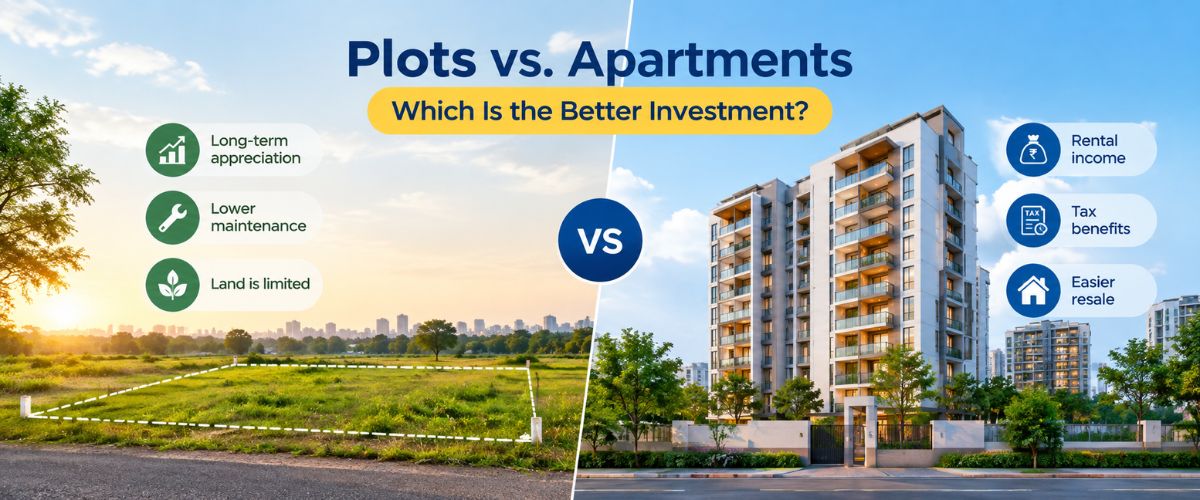
If you are planning to buy a residential plot that follows the Khata system, one document that will come up in almost every conversation is the Khata certificate. Most buyers have heard the word, few understand what it actually means, and even fewer know the difference between an A Khata and a B Khata before they sign the agreement.
This is especially relevant if you are exploring a farmland project near Bangalore, where land records often involve both BBMP and Panchayat jurisdictions. Understanding Khata before you invest can save you from costly surprises later.
What Is a Khata Certificate?
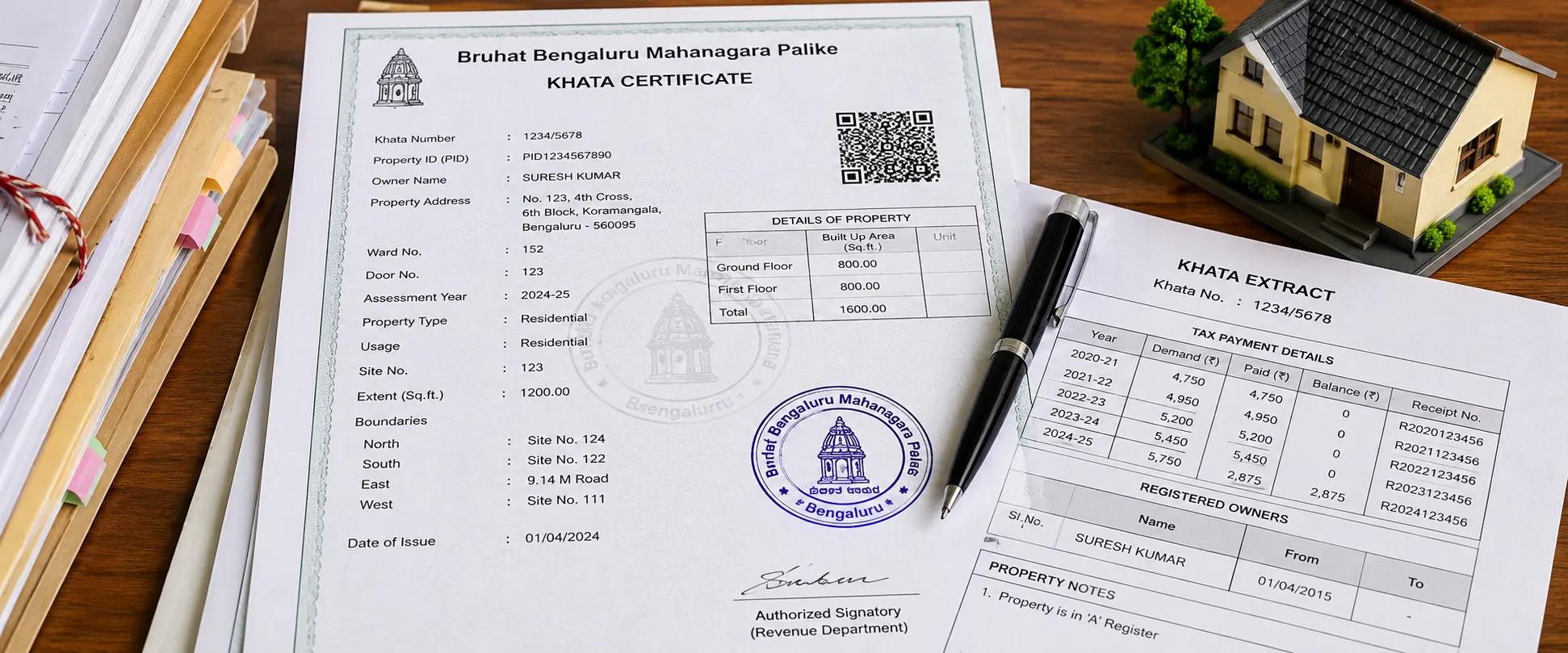
A Khata is an account entry maintained by the local municipal authority, such as BBMP in Bengaluru, that records a property owner's details for the purpose of property tax assessment. The word Khata literally means account in Kannada and several other Indian languages.
It is not a title document and does not prove ownership on its own, but it is an official acknowledgment by the local body that a particular person is liable to pay property tax on a specific property.
Many buyers confuse Khata with a title deed or a sale deed. The sale deed is the document that transfers ownership from the seller to the buyer. The Khata is separate and comes after registration.
The Khata Certificate Includes:
Owner's name
Property address
Plot size
Property Identification Number (PID)
Annual tax assessment details
The Khata Extract Contains:
Tax payment history
Outstanding dues
Ownership changes
Property records history
Why a Valid Khata Is Important?
Building plan approval may not be possible
Water and sewage connections may be denied
Banks may refuse loans
Future resale may become difficult
A Khata vs B Khata: What Is the Difference?
The most important distinction in the Khata system is between A Khata and B Khata.
A Khata:
An A Khata is issued for properties that are:
Legally approved
Fully compliant
Located in approved layouts
Free from pending dues
Eligible for building approvals and loans
B Khata:
A B Khata is maintained for properties that may have:
Unapproved layouts
Revenue land issues
Pending regularization
Planning authority approval problems
Betterment charge issues
Paying property tax on a B Khata property does not make the property legal.
A Khata vs B Khata Comparison:
Feature
A Khata
B Khata
Legal Status
Fully compliant and approved
Non-compliant or pending regularization
Building Plan Sanction
Allowed
Not permitted
Bank Loans
Available from most banks
Often denied
Property Tax Records
A Register
B Register
Utility Connections
Allowed
Often restricted
Resale Value
Higher
Lower
Conversion Required
No
May require conversion
Questions to Ask Before Buying
Is the property A Khata or B Khata?
Is the layout approved?
Have betterment charges been paid?
Can the property obtain building approval immediately?
How to Transfer a Khata After Buying a Plot
Khata transfer should be completed shortly after registration.
Documents Required:
Registered sale deed
Previous owner's Khata certificate
Khata extract
Latest tax paid receipt
Encumbrance Certificate (13 years)
Aadhaar Card
PAN Card
Property sketch or site plan
Possession letter (if applicable)
Betterment charge receipt (if applicable)
Self-declaration form
Transfer Process:
Submit application at BBMP Citizen Service Centre.
Submit required documents.
Site inspection by BBMP officials.
Verification of records.
Issue of new Khata certificate.
Typical processing time: 30–90 days.
What Is Khata Bifurcation?
Khata bifurcation means splitting one Khata into multiple Khatas.
Example: A 4,000 sq ft property is divided into two 2,000 sq ft plots. Each plot requires a separate Khata.
When Is It Required?
Layout developments
Property subdivision
Sale of portions of larger land parcels
Documents Needed
Original Khata
Approved layout plan
Sale deed
Surveyor certificate
Property boundary details
Buyer Checklist
Has Khata bifurcation already been completed?
Am I receiving an independent Khata?
Is my plot linked to a parent Khata?
How Does Khata Affect Your Ability to Get a Plot Loan?
Banks review Khata documents during legal verification.
A Khata Properties
Generally eligible for:
Plot loans
Home loans
Construction loans
B Khata Properties
Often face:
Loan rejection
Lower loan eligibility
Additional legal scrutiny
Documents banks typically require:
Khata certificate
Khata extract
Tax receipts
Encumbrance Certificate
Khata status directly impacts future resale value and financing options.
How to Verify Khata Details Before Buying
Online Verification
Verify through BBMP records using:
Property ID
Owner name
Application number
Check:
A or B Register status
Outstanding dues
Property notes or restrictions
Offline Verification:
Review:
Original Khata certificate
Khata extract
Tax payment history
Visit the BBMP ward office to verify:
Property records
Dues
Encroachments
Ownership details
Verification Checklist
Check BBMP online records.
Confirm A or B Khata status.
Examine original documents.
Match ownership records.
Verify tax dues.
Visit ward office.
Verify parent Khata for layout plots.
Confirm issuing authority.
Cross-check with Encumbrance Certificate.
Key Takeaways
A Khata is a municipal record, not a title document.
A Khata properties are eligible for approvals and loans.
B Khata properties carry legal and financing risks.
Verify BBMP Khata or Panchayat Khata status before purchase.
Complete Khata transfer immediately after registration.
Ensure Khata bifurcation is completed for layout plots.
Verify records both online and at the ward office.