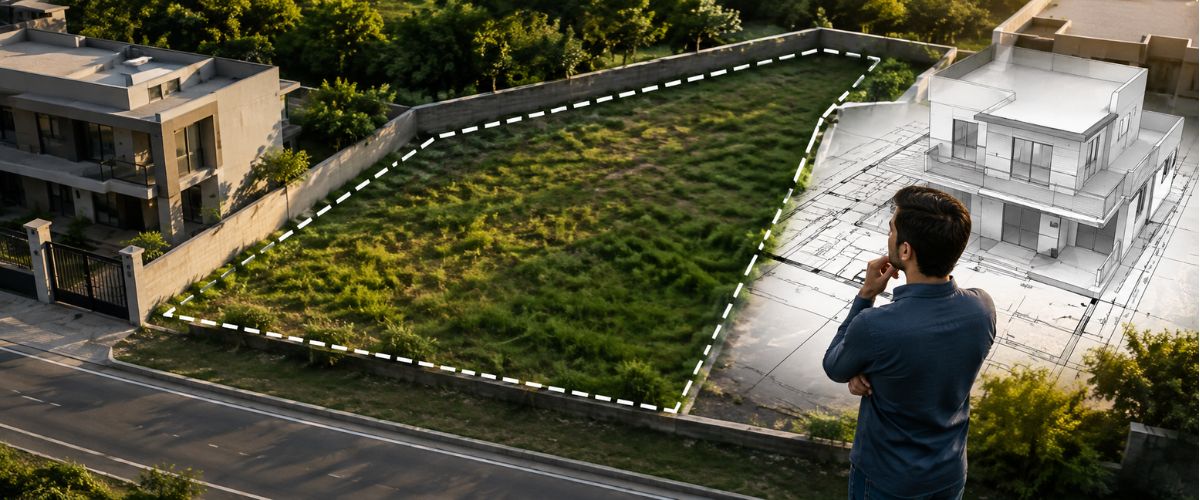
The site visit is the most important and the final step in booking a plot. This provides physical confirmation to buyers on things not comprehensible through files or internet postings. Even if the paperwork looks perfect, the ground reality may differ significantly.
A site visit ensures you are not misled by marketing claims and gives you the chance to assess legal, physical, and environmental aspects of the land.
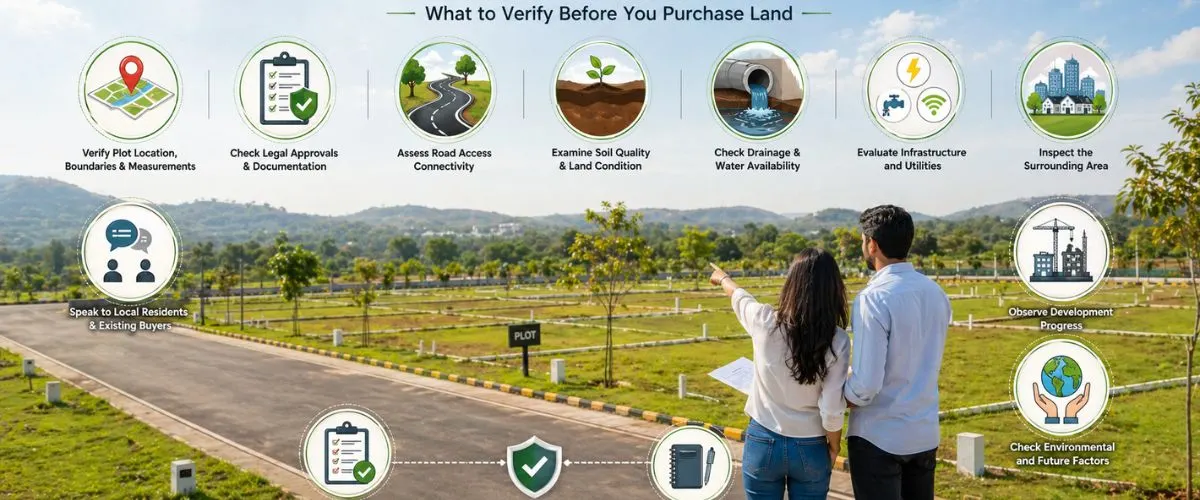
Site Visit Checklist:
1. Verify Plot Location, Boundaries & Measurements
2. Check Legal Approvals & Documentation
3. Assess Road Access Connectivity
4. Examine Soil Quality & Land Condition
5. Examine Soil Quality & Land Condition
6. Check Drainage & Water Availability
7. Evaluate Infrastructure and Utilities
8. Inspect the Surrounding Area
9. Speak to Local Residents & Existing Buyers
10. Observe Development Progress
11. Check Environmental and Future Factors
12. Carry Essential Tools & Documents
Match the plot with the approved layout plan. Ensure that:
If possible, carry a measuring tape or hire a surveyor. Boundary disputes are common, so this step is essential. Also check for any encroachments or unauthorized use from nearby properties.
Verify legal compliance during your visit:
Request copies of:
Approved layouts ensure the land is legally usable and help avoid future disputes.
Accessibility impacts both usability and future value. During your visit:
Proximity to schools, hospitals, markets, and transport adds value. Visit the site at different times to understand traffic conditions.
Construction depends heavily on soil quality. Look for:
Plots that are waterlogged or uneven may require heavy investment before construction.
Evaluate water and drainage systems carefully:
Poor drainage can lead to flooding during monsoons, making the plot unsuitable for living.
Check for basic civic amenities:
Ask the developer about timelines for utility connections. Good infrastructure improves comfort and resale value.
You are not just buying land, but becoming part of a community. Observe:
A good neighborhood supports both lifestyle and long-term appreciation.
Talk to:
They can provide honest insights about:
Real feedback often reveals more than sales presentations.
Check if the project is progressing as promised:
Avoid projects that exist only on paper or show slow development, as delays can affect possession timelines.
Evaluate long-term risks and surroundings:
Visit at different times of the day to understand real conditions.
Bring the following during your visit:
Being prepared helps you inspect thoroughly and compare options later.
A site visit is not just a formality—it is your strongest protection against costly mistakes. From verifying boundaries and legal approvals to evaluating infrastructure and surroundings, every detail matters.
Skipping or rushing this step can lead to legal issues, unexpected costs, or even loss of investment. A structured checklist ensures you assess the plot from legal, physical, and practical angles.
Take detailed notes, observe carefully, and only then move forward with your purchase. In real estate, what you see on-site matters far more than what you read or hear.