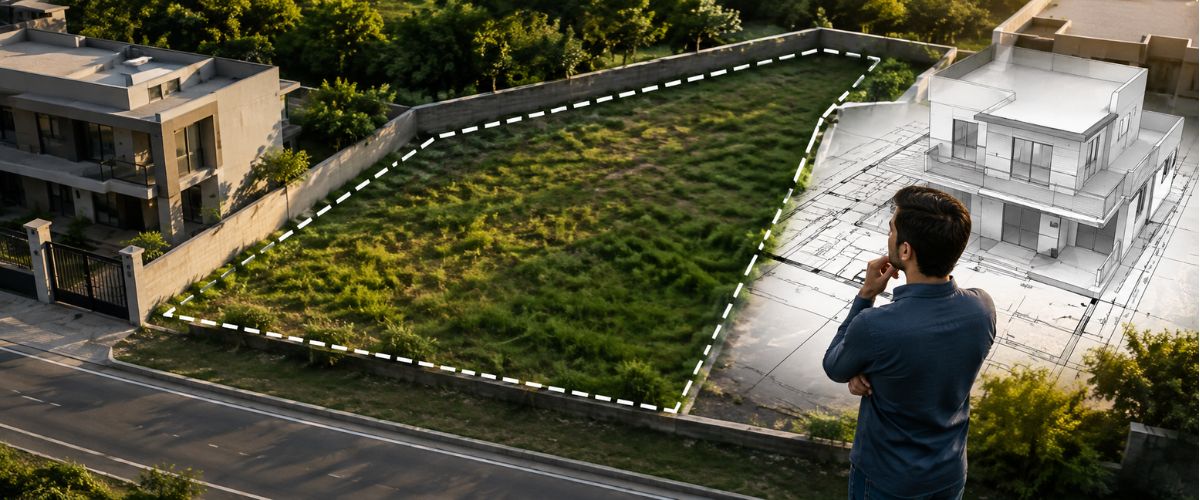

Choosing between a commercial plot and a residential plot is one of the most common dilemmas investors face when entering the real estate market. Both offer distinct advantages depending on budget, risk appetite, and long-term goals. This article breaks down the key differences to help investors make an informed decision.
A commercial plot is designated for business-related use, such as retail shops, offices, warehouses, or showrooms, while a residential plot is meant strictly for building homes. This distinction is defined by the local development authority under land-use zoning regulations, and using a plot outside its permitted classification can lead to legal complications.
The type of construction allowed on each plot differs significantly. A residential plot permits only dwelling units, whereas a commercial plot allows structures built for trade, services, or business operations, often with different floor space index (FSI) norms and building height permissions.
Zoning classification is decided by the master plan of a city or town, which designates specific land parcels for residential, commercial, industrial, or mixed-use purposes. Before purchasing either type of plot, it is essential to verify this classification with the local municipal or development authority to avoid future disputes.
Commercial plots generally show a higher appreciation rate than residential plots, particularly in fast-developing commercial corridors or areas with strong business activity. This is largely driven by demand from businesses seeking retail or office space in growing localities.
Rental yield is another area where commercial plots have an edge. Commercial properties typically generate higher rental income compared to residential properties, since businesses are often willing to pay a premium for well-located commercial space, whereas residential rental yields tend to remain modest.
For long-term investment, the better option depends on the investor's goals. Residential plots offer more stability and steady, if slower, appreciation, making them suitable for long-term wealth building tied to housing demand. Commercial plots, on the other hand, tend to deliver faster capital appreciation but require a longer-term view of business and infrastructure growth in the area.
Liquidity also varies between the two. Residential plots are generally easier to resell due to consistent demand from home buyers, while commercial plots may take longer to find the right buyer, since the pool of commercial investors is comparatively smaller.
Commercial plots are usually priced higher than residential plots in the same locality, primarily due to their income-generating potential and the higher construction value business use can command.
The minimum budget required for a commercial plot investment tends to be significantly higher than for a residential plot, since commercial land in prime or developing business zones commands a premium per square yard or square foot.
Stamp duty and registration charges can also differ between commercial and residential plots, with many states levying a slightly higher stamp duty rate on commercial properties. It is advisable to check the applicable state-specific rates before finalising a purchase.
Loans for commercial plots are structured differently from residential plot loans. Commercial plot loans usually come with shorter tenures and stricter eligibility criteria, since lenders view commercial investments as carrying a higher risk profile.
The loan-to-value (LTV) ratio banks approve for commercial plots is typically lower than for residential plots, often in the range of 50-70% of the plot's value, compared to higher LTV ratios commonly available for residential purchases.
Interest rates also tend to differ, with commercial plot loans generally carrying slightly higher interest rates than residential plot loans, reflecting the increased risk lenders associate with commercial real estate financing.
Before buying a commercial plot, it is important to verify legal documents such as the title deed, land-use certificate, zoning approval, and encumbrance certificate to confirm clear ownership and permitted use.
Property tax on commercial plots is usually higher than on residential plots, since municipal authorities apply different tax slabs based on the commercial income potential of the land.
RERA registration requirements can apply to both commercial and residential plots, depending on the size of the project and the number of units involved, so checking RERA compliance is equally important for either type of purchase.
Commercial plot investment is sometimes considered riskier due to its dependence on business cycles, local commercial demand, and infrastructure development, all of which can be less predictable than housing demand.
Residential plots, by contrast, are often seen as the safer investment option because housing demand tends to remain relatively stable even during economic slowdowns, offering more predictable long-term value retention.
Maintaining a vacant commercial plot can also be costlier, since such plots may require additional security measures and consistent monitoring to prevent encroachment or unauthorised use in high-value commercial areas.
During a market slowdown, commercial plots tend to be more affected than residential plots, as business expansion and retail demand typically slow down faster than housing demand during periods of economic uncertainty.
A first-time investor is generally better suited to a residential plot, given its lower entry cost, simpler financing options, and steadier long-term demand compared to commercial real estate.
Location plays a decisive role in this decision, since a residential plot in a well-connected, upcoming neighbourhood may outperform a poorly located commercial plot, and vice versa in a thriving business district.
Investors with a higher risk appetite and a longer investment horizon are typically better positioned to consider commercial plots, while those seeking steady, low-risk appreciation should lean toward residential plot investment.
Conclusion
Both commercial and residential plots offer distinct advantages, and the right choice ultimately depends on an investor's budget, risk tolerance, and long-term financial goals. A well-located, RERA-compliant plot — whether commercial or residential — remains one of the most reliable ways to build long-term value in real estate.