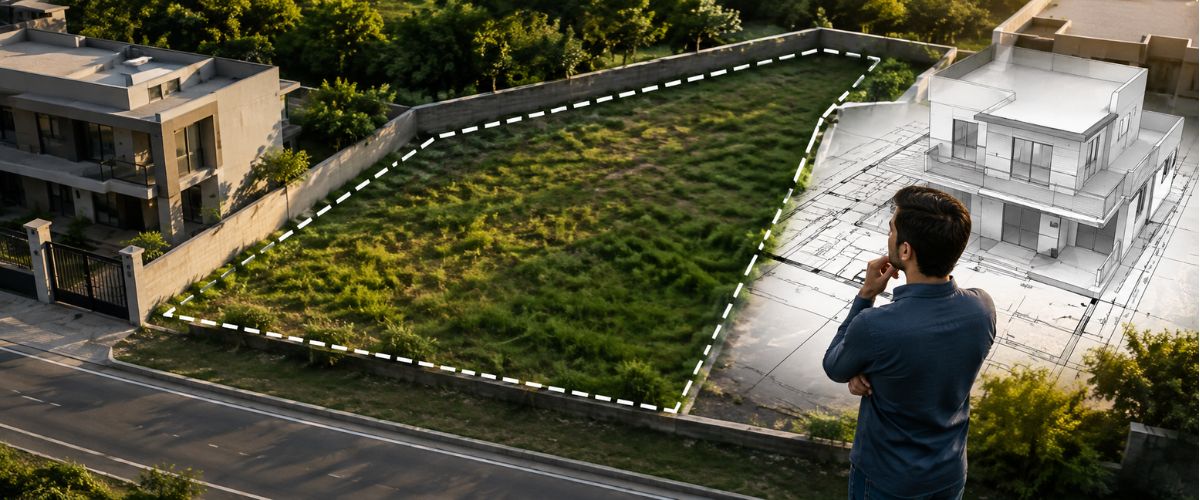

Purchasing a clean portion of land is widely viewed as one of the safest and most high yielding investments. The lure of cheaper prices and fast deals so far has pushed buyers to jump into unapproved plots – properties that have not sought clearance from local planning bodies. And although these plots may seem attractive, it holds heavy legal, financial and practical risks to make a promising investment degenerate into a long-term liability.
For example, Ganesh Nagar, approved plots in Jaipur have proper Rera approval, ensuring clear titles, legal security, and eligibility for construction and bank loans.
An unapproved plot is a piece of land for which no plot has been approved by the relevant municipal or development authority for residential or commercial use. These may be layouts that have not been approved, agricultural land converted for residential use or sites that violate zoning regulations.
Most buyers believe that once a property is registered, it must be legal. Indeed, registration merely serves to record the transaction without ensuring that it complies with planning statutes or norms of land use.
Legal uncertainty is one of the biggest risks of unapproved plots. Because these plots lie in violation of planning norms, authorities can issue notices, impose fines and even demolish constructions on such land.
This risk has been underscored by recent enforcement drives across Indian cities where encroachments have been removed without prior approvals.
Buyers may face prolonged legal battles over ownership or disputes with neighbors due to zoning violations, leading to stress, financial loss, and years of litigation.
Even after purchasing such land, constructing a house can be very difficult. Local authorities usually refuse to grant building permission on unapproved plots. In some cases, partially completed structures receive stop-work or demolition notices.
This means the main purpose of buying land—construction—may never be fulfilled.
Due to legal risks, banks and financial institutions usually avoid providing loans for unapproved plots. Such land is not considered a secure asset.
As a result, buyers are forced to pay cash or take high-interest private loans, increasing financial risk and reducing transparency.
Unapproved layouts often lack proper infrastructure. Basic facilities like roads, drainage, water supply, sewage systems, and electricity are either missing or poorly developed.
Since these developments are not officially recognized, municipal authorities are not obligated to provide civic services, increasing the burden on buyers.
Fraudulent practices are more common in unapproved plots. Developers may sell land without clear titles or proper documentation.
Some plots may be disputed or even sold to multiple buyers. Fake documents and misleading claims can result in ownership conflicts, eviction risks, or long legal battles.
Unapproved plots generally have poor resale value. Buyers prefer legally approved properties, making it difficult to sell such land.
Additionally, future buyers may not get loans, reducing demand and leading to depreciation over time.
Many unapproved plots fall within areas designated for public infrastructure such as roads, parks, or environmental zones.
In such cases, the government may acquire the land, sometimes without fair compensation, leading to potential total loss of investment.
Sellers often mislead buyers by claiming approvals are “under process” or will be granted soon. These claims are rarely reliable.
With stricter regulations, post-purchase approval is uncertain and often not feasible. Depending on future regularization schemes is risky due to changing policies.
Although unapproved plots may seem cheaper initially, hidden costs of land can outweigh savings. Buyers may need to spend on legal verification, penalties, infrastructure setup, and dispute resolution.
In the long term, these plots often become financially unviable due to limitations in resale, construction, and financing.
Unapproved developments result in poorly planned neighborhoods with narrow roads, lack of green spaces, and inadequate civic facilities.
Such areas may face overcrowding, sanitation issues, and safety concerns, negatively affecting quality of life and future growth.
There are significant risks associated with unapproved plots, making them a risky investment choice. From legal complications and lack of infrastructure to financial challenges and low resale value, the drawbacks outweigh the benefits.
In today’s regulatory environment, investing in unapproved land is not a calculated risk but a potential liability. Buyers must conduct thorough due diligence, verify approvals, and consult legal experts before making any investment decision.