If you have been scrolling through property listings lately and noticed farmland plots popping up between apartment listings, you are not alone. Buying farmland near Bangalore has quietly become one of the more interesting conversations in real estate and investment circles. But is it actually a good investment, or just an expensive hobby?
This article gives you an honest, ground-level answer.
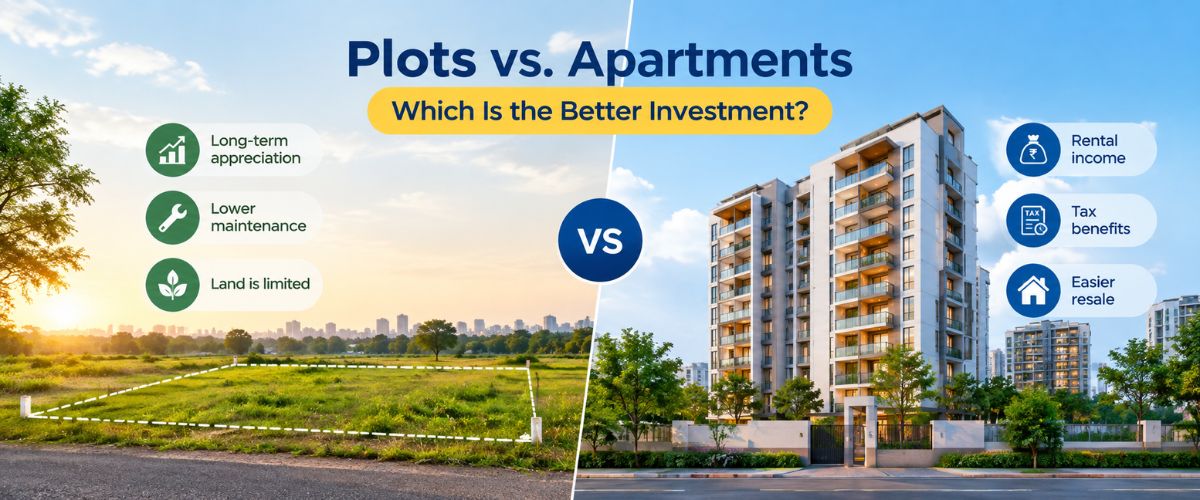
Bangalore's urban real estate market has hit a ceiling for many investors. Apartment prices in prime areas like Whitefield, Sarjapur, and Hebbal have climbed so steeply that entry-level ROI no longer justifies the risk for new buyers. This is pushing a segment of investors, particularly IT professionals and NRIs, toward agricultural land on the city's outskirts.
The appeal is logical: lower entry prices, long-term land appreciation, and an asset that's disconnected from stock market volatility. Add to that the emotional pull of owning something tangible and green in a city that's rapidly turning concrete.
But farmland near Bangalore is not a monolith. A plot 30 km from the city on the Kanakapura Road corridor behaves very differently from land in Chikkaballapur or Tumkur. Location, soil type, water access, and legal title quality vary enormously, and those differences determine whether your investment thrives or stagnates.
When people ask about buying farmland near Bangalore, they usually mean one of three things:
1. Raw Agricultural Land Purchase
You buy a plot, hold it, and hope for appreciation. Maintenance requirements are low, but there is generally no income generated during the holding period.
2. Managed Farmland
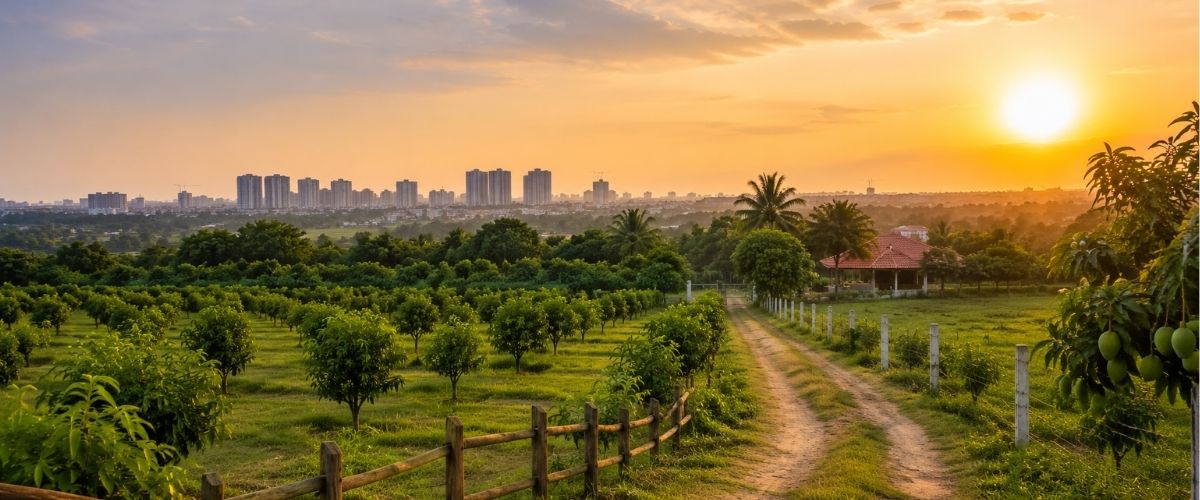
You buy land that a professional company farms on your behalf. You earn a share of crop income while land appreciation builds in the background. This model has grown rapidly around Bangalore, particularly for mango orchards, coconut plantations, teak projects, and agroforestry combinations.
3. Farm Plot Communities
These are gated farm villa developments where you own a plot within a shared infrastructure project. They tend to function more as lifestyle assets than pure investments.
The ROI profile, risk level, and legal complexity differ across all three models. Most online content focuses heavily on managed farmland, but that represents only one option for investors evaluating agricultural land.
Recent market trends across Karnataka's major growth corridors suggest the following:
One important point often overlooked is that appreciation is not uniform. Many projects marketed as future growth corridors have underperformed because infrastructure timelines were delayed or development plans changed.
This is where many investors make costly mistakes. Agricultural land in Karnataka comes with legal complexities that urban property buyers often underestimate.
Under the Karnataka Land Reforms Act, agricultural land ownership rules have evolved over time. Although significant relaxations were introduced in 2020, buyers should still seek professional legal advice regarding eligibility and compliance requirements.
Agricultural land frequently involves multi-generational ownership histories, family partitions, inheritance claims, and encumbrances that may not be immediately obvious. A comprehensive legal audit is essential before purchase.
If you intend to build a farmhouse, resort, or residential structure, you may require land conversion approval under Section 95. The process can take years and approval is not guaranteed.
Certain agricultural properties may be subject to restrictions under the Karnataka Scheduled Castes and Scheduled Tribes (Prohibition of Transfer of Certain Lands) Act. Independent verification is critical.
No projected crop yield or appreciation forecast can compensate for legal disputes. Buyers should insist on a detailed title review, a long-term encumbrance certificate, and an authenticated survey sketch before proceeding.
For a well-selected, legally compliant managed farmland investment near Bangalore, a realistic 10-year scenario may look like this:
When land appreciation and agricultural income are combined, total returns can compete with or exceed certain urban real estate investments. However, farmland is significantly less liquid. Finding a buyer at full market value may take anywhere from six months to 18 months.
Good Fit For
Not a Good Fit For
Buying farmland near Bangalore can be a strong long-term investment, but success depends heavily on location, legal clarity, water availability, management quality, and realistic expectations.
The opportunity is supported by land scarcity around a growing metropolitan region, expanding infrastructure, and increasing demand for alternative real estate assets. At the same time, investors must account for legal complexity, slower liquidity, agricultural risks, and long holding periods.
The investors who tend to perform best are those who approach farmland with the same discipline they would apply to any other asset class. They verify ownership records, assess water security, understand management structures, and evaluate exit options before committing capital.
If you're considering a specific farmland project near Bangalore, focus less on projected yields and more on practical fundamentals: title clarity, water resources, operational management, and resale potential. Get those factors right, and farmland can become a valuable addition to a diversified long-term portfolio.